



A captivating film revealing the journey of how the Isle of Rum became the first place in Scotland to achieve Dark Sky Sanctuary status is now available to watch.
Rum's Dazzling Dark Skies, funded by a grant from the Royal Astronomical Society, showcases the incredible community effort involved in achieving what the filmmakers called "a momentous milestone" for the Inner Hebrides.
The Isle of Rum, spanning 8 miles by 8 miles, is only the UK's second Dark Sky Sanctuary – joining Bardsey Island (Ynys Enlli) in Wales – and one of just 23 worldwide designated by DarkSky International.
With no public lighting and a population of less than 40 full-time residents, the remote island offers unparalleled opportunities for stargazing and night sky conservation, the organisation said.
Rum's Dazzling Dark Skies was made by filmmaker Davey Poremba and presenter Luke Waterson.
"Any community being able to secure such prestigious dark sky status would be incredible in itself, but the fact this was achieved by a tiny group of people on one of Scotland's remotest islands makes the feat even more remarkable," said Waterson.
"Almost all the islanders were involved in some shape or form in achieving the designation, which protects the island's notably diverse wildlife and raises the profile of tourism on the island."
Rum received its Dark Sanctuary designation in August 2024, a month after Waterson and Poremba finished filming.
The hope is that such status will help it boost its economy through increased visitor numbers and activities that can ensure the community can continue to act as responsible custodians of the island's nature.
Waterson added: "Our film is about the journey of a community uniting towards ensuring the long-term survival of their island as a place people can live, visit, enjoy - and appreciate the nature all the more now Dark Sky Sanctuary status protects it."
The Isle of Rum removed all public lighting in 2008 and followed this up with a community-wide initiative to replace household and business outdoor lighting.
The island is home to a rich diversity of wildlife, including seabirds, golden eagles, white-tailed sea eagles, Red-throated divers and over 120,000 breeding pairs of Manx Shearwaters.
"Davey and myself are passionate about wildlife and nature, so the first thought with making a film about the Isle of Rum was doing so to spotlight its incredible nature," said Waterson.
"But any film narrative has to be led by the story a place wants to tell, and it quickly became obvious the journey of this community towards achieving Dark Sky Sanctuary status was the story to tell."
Poremba added: "I personally wanted to be part of this project to learn more about Dark Sky status and why it's so important, while being immersed in such a wild environment as Rum.
"We hope the film will spark an interest among astronomy enthusiasts and lovers of the night sky, therefore boosting tourism numbers in the winter months.
"This will help to keep the islanders going financially, continue the support for dark skies – not only on Rum, but across the country and beyond – and help all the wildlife affected by it."
Professor Catherine Heymans, the Astronomer Royal for Scotland, supported both the Isle of Rum’s application for Dark Sky Sanctuary status and the making of Rum's Dazzling Dark Skies.
"With this new film Rum's aspirational journey, seeking to achieve international recognition as a Dark Sky Sanctuary, will be shared globally," she said.
"It showcases the uniqueness of the UK in our access to genuinely dark skies and aurora sightings."
Professor Heymans took part in an event at the school on Rum and said "a new generation of stargazers" had been inspired by the island's commitment to the project.
"For me it's been a delight to see how Rum's Dark Sky initiative has promoted and advanced STEM subjects in the classroom – and will continue to do so for many years to come," she added.
"The children on Rum asked me so many awesome questions about the universe. Seeing their united curiosity, passion and pride for their home dark skies was magnificent."
The island's future plans include creating an observing tower for enhanced stargazing, the installation of an all-sky camera and weather station for global viewing, and increased education and outreach programmes for visitors and residents.
ENDS
Media contacts
Sam Tonkin
Royal Astronomical Society
Mob: +44 (0)7802 877 700
Images & captions
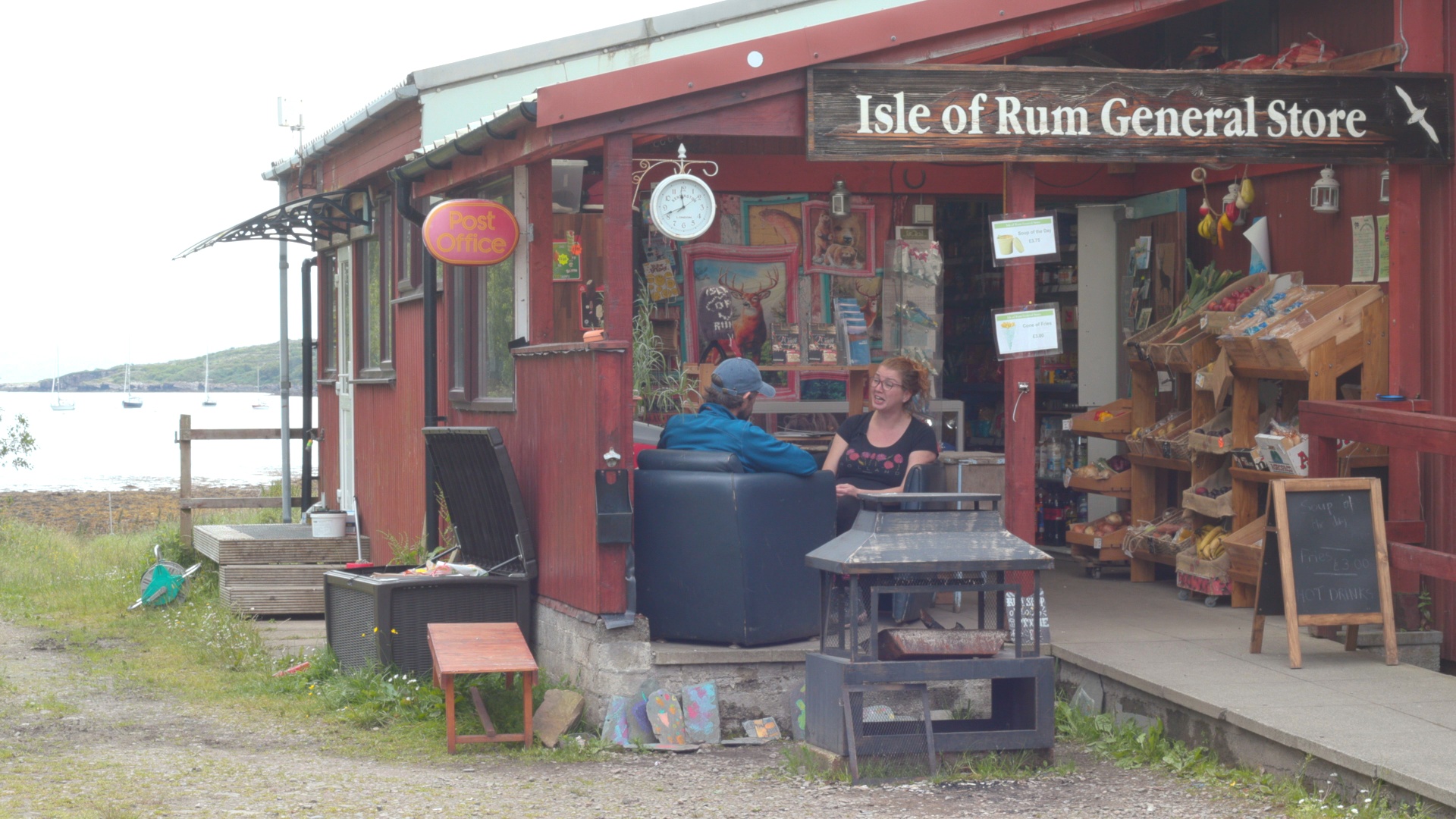
Rum’s Dazzling Dark Skies - interview 1
Caption: The island’s shopkeeper Jenny Thompson talks about what the Dark Sky Sanctuary designation could do for tourism on Rum.
Credit: Davey Poremba/Luke Waterson
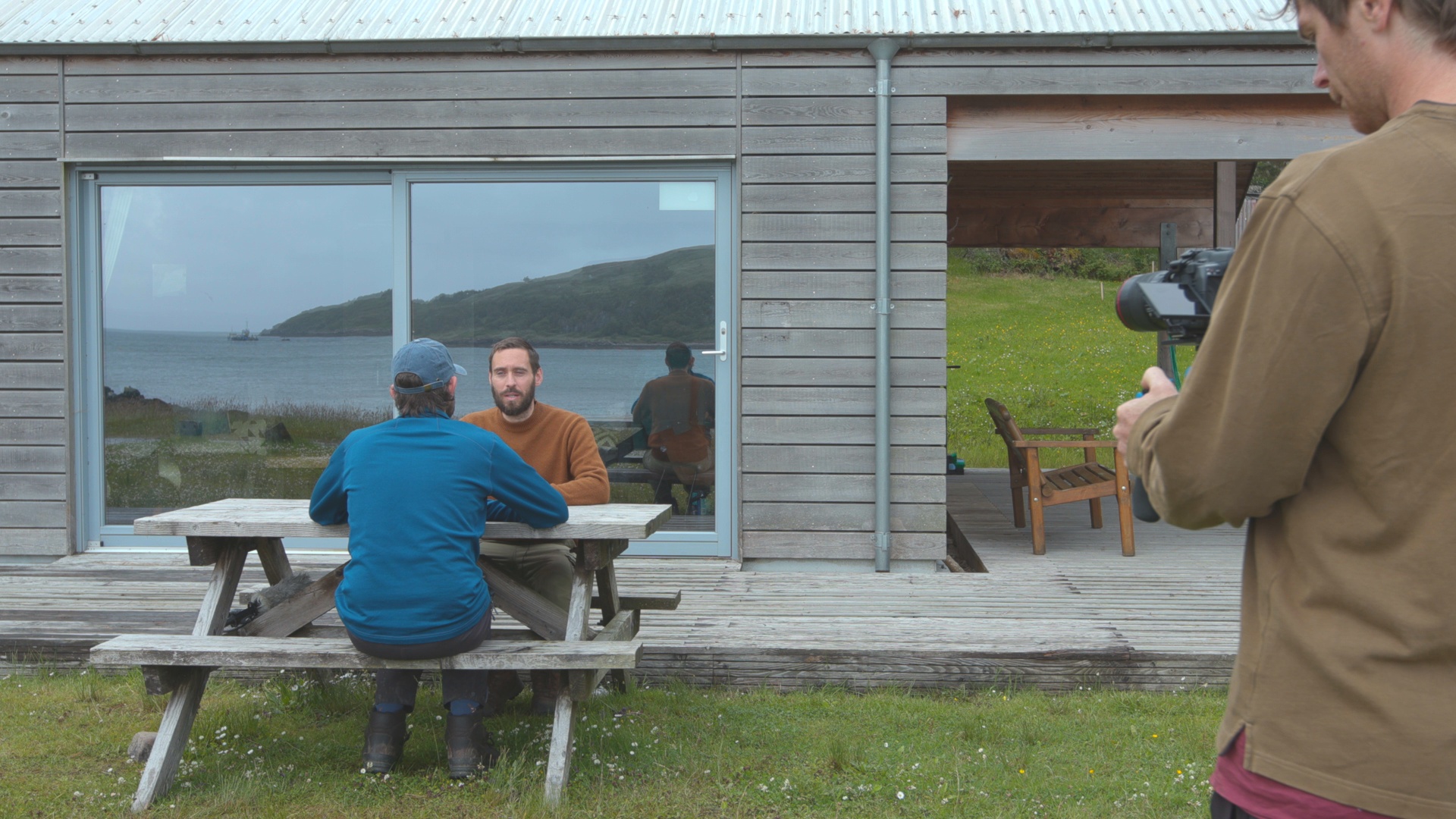
Rum’s Dazzling Dark Skies - interview 2
Caption: Alex Mumford, who made the application for Dark Sky Sanctuary status, speaks to presenter Luke Waterson.
Credit: Davey Poremba/Luke Waterson
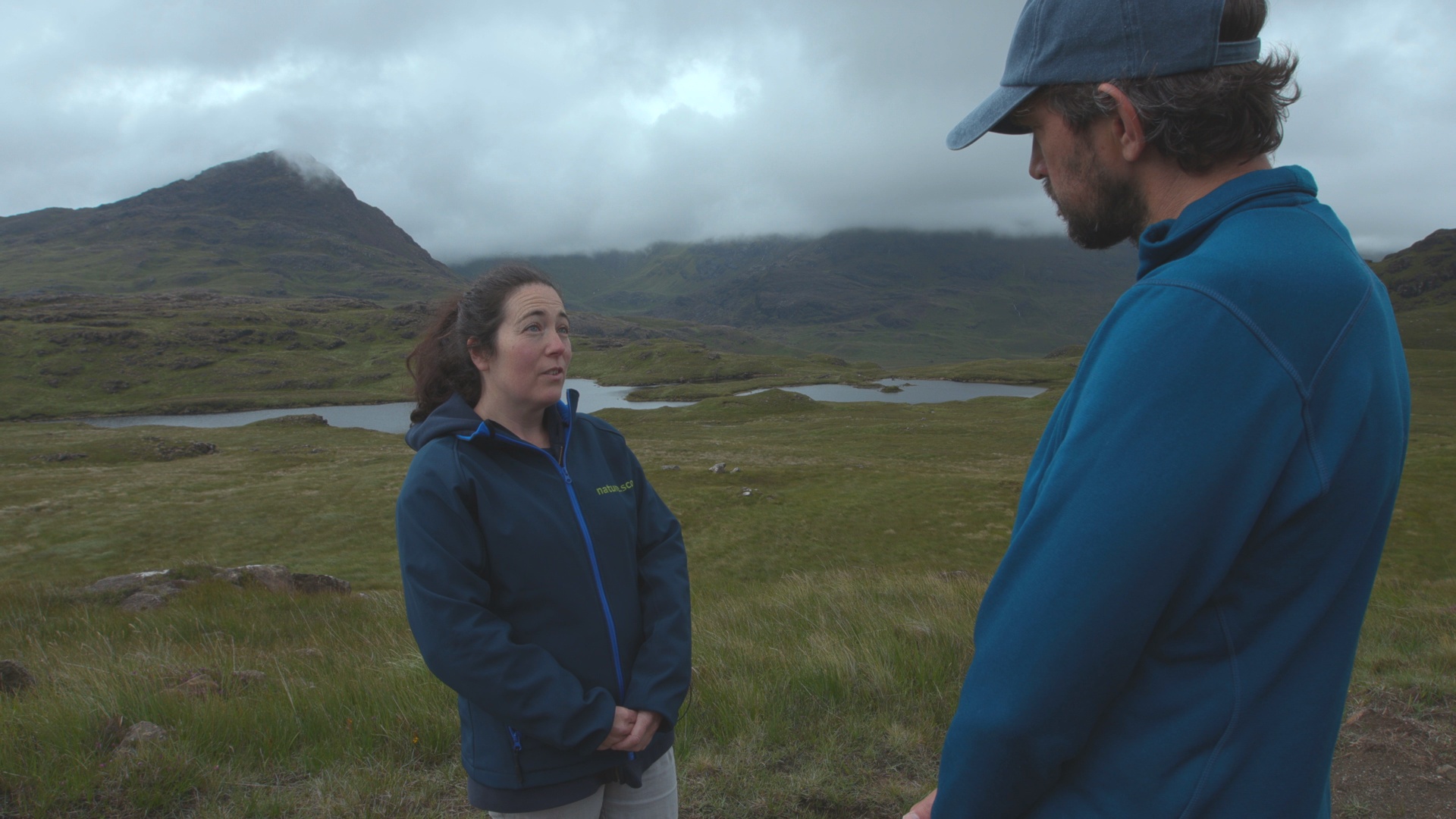
Rum’s Dazzling Dark Skies - interview 3
Caption: Luke Waterson interviews Lesley Watt, NatureScot’s Rum National Nature Reserve Officer, about the island’s wildlife.
Credit: Davey Poremba/Luke Waterson
Notes for editors
About the Royal Astronomical Society
The Royal Astronomical Society (RAS), founded in 1820, encourages and promotes the study of astronomy, solar-system science, geophysics and closely related branches of science.
The RAS organises scientific meetings, publishes international research journals, recognises outstanding achievements by the award of medals and prizes, maintains an extensive library, supports education through grants and outreach activities and represents UK astronomy nationally and internationally. Its more than 4,000 members (Fellows), a third based overseas, include scientific researchers in universities, observatories and laboratories as well as historians of astronomy and others.
The RAS accepts papers for its journals based on the principle of successful peer review, following which experts on the Editorial Boards accept the papers for publication. The Society issues press releases based on a similar principle, but the organisations and scientists concerned have overall responsibility for their content.
Keep up with the RAS on Instagram, Bluesky, LinkedIn, Facebook and YouTube.
Download the RAS Supermassive podcast